
“RAG” shows up constantly in AI product descriptions now, usually without anyone explaining what it actually means. Retrieval-augmented generation is not a new model or a competitor to ChatGPT — it is a technique that changes where an AI’s answers come from, and understanding that distinction is the difference between an AI tool that confidently makes things up and one that answers from your actual documents.
The Core Idea, Without the Jargon
A standard language model answers purely from what it learned during training — a fixed snapshot, frozen at whatever point training stopped. A RAG system adds a step before the model answers: it retrieves relevant snippets from your own content, stores them as searchable embeddings in a vector database, and includes the closest matches directly in the prompt. The model still writes the answer, but it is now writing from your actual documents, not just from what it memorized months or years ago.
Why That Difference Matters in Practice
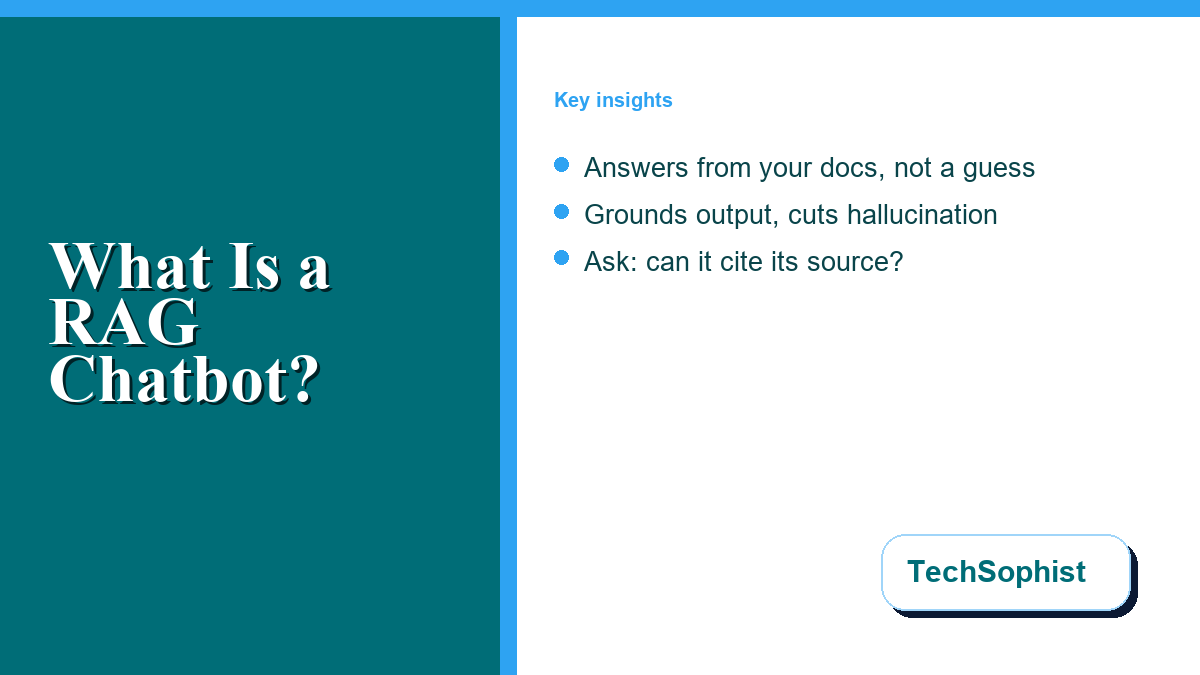
This retrieval step grounds the output in current, verifiable information, which is what actually reduces hallucination — not a bigger model, a better retrieval step. A model without RAG asked about your company’s return policy will confidently guess. A model with RAG pulls your actual policy document first, then answers from it. The difference is not subtlety in the writing; it is whether the answer is true.
Where Businesses Actually Use This
- Internal knowledge management. Answering employee questions from HR handbooks, policy documents, and internal wikis without someone manually searching a shared drive.
- Customer support. Powering a support chatbot that answers from actual product documentation and past ticket resolutions, rather than a generic training-data guess.
- Document-grounded research. Answering questions against a specific set of contracts, reports, or reference material rather than the open internet.
What to Ask a Vendor Claiming RAG Support
Not every product that says “RAG-powered” implements it the same way. Worth asking directly: how current is the retrieval index, does it update automatically when source documents change, and can the system cite which specific document an answer came from. A vendor that cannot answer the citation question is not really offering grounded answers, whatever the marketing copy says. Charigent’s own explanation of what a RAG chatbot is and why it matters is a useful second reference point for anyone evaluating vendor claims against the actual mechanism.
The Bottom Line
RAG is not a buzzword to filter out — it is the specific mechanism that separates an AI tool that answers from your real information from one that answers from a guess. Understanding it is worth five minutes, especially before signing a contract with “RAG-powered” in the pitch.

0 Comments